Digital Magazine Platform
UX/UI Design, NC State University
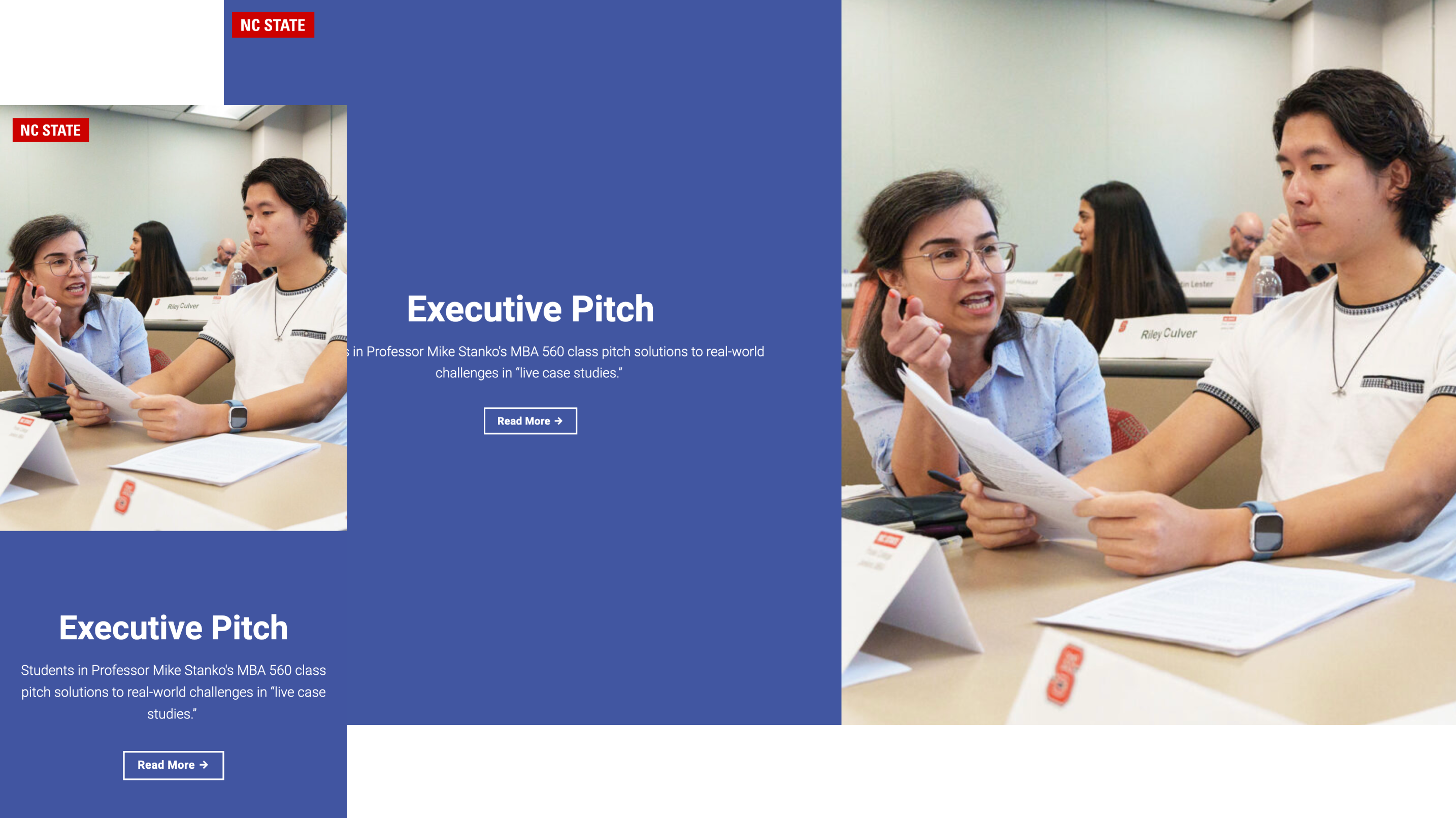
Table of Contents
Overview
As part of a broader digital transformation effort, NC State launched a new digital magazine platform to replace its traditional print publications and outdated digital infrastructure. This initiative reimagined what a university magazine could be in a modern, web-native format — integrated, scalable, and easier to use.
We sought to evolve the magazine framework into a dynamic publishing platform that not only unified the university’s digital content ecosystem but also delivered a consistent, high-quality user experience across all affiliated sites.
My Role
I served as one of two lead UX/UI product designers, working in close collaboration with developers and a project manager. My responsibilities spanned the full product design lifecycle:
- Conducting user and stakeholder research
- Mapping UX pain points and workflows
- Prototyping and testing interaction models
- Designing the UI system, layouts, and reusable blocks
- Collaborating on frontend development handoff
Problem
To ensure the new platform addressed real user needs, we conducted interviews with content editors, site managers, and communications leads across campus. From these discussions, three core issues emerged:
1. Disjointed User Interface
Most university clients manage a suite of digital properties — typically a primary marketing site, a news site, and a magazine site. These platforms were siloed, visually inconsistent, and lacked integration, creating a fragmented user experience for both editors and readers.
In particular, the magazine UI diverged from the design and functionality of its companion sites, requiring users to relearn navigation and content behaviors when moving between platforms.
2. Limited Storytelling Tools
The magazine’s original content management system offered only a few rigid layout options, limiting creativity and flexibility. In contrast, the university’s newer news platform had a much more expansive component library. Editors found the magazine restrictive by comparison, especially when trying to build rich editorial features or highlight multimedia content.
3. Outdated Backend Infrastructure
The magazine platform was still running on an older version of WordPress, which was nearing end-of-life support. This presented a major risk for security and long-term maintenance. Furthermore, it created incompatibility with the university’s upgraded news platform, which used the Gutenberg block editor. Clients managing multiple sites were juggling different systems with different capabilities.
Solution and Results
Modernized Infrastructure
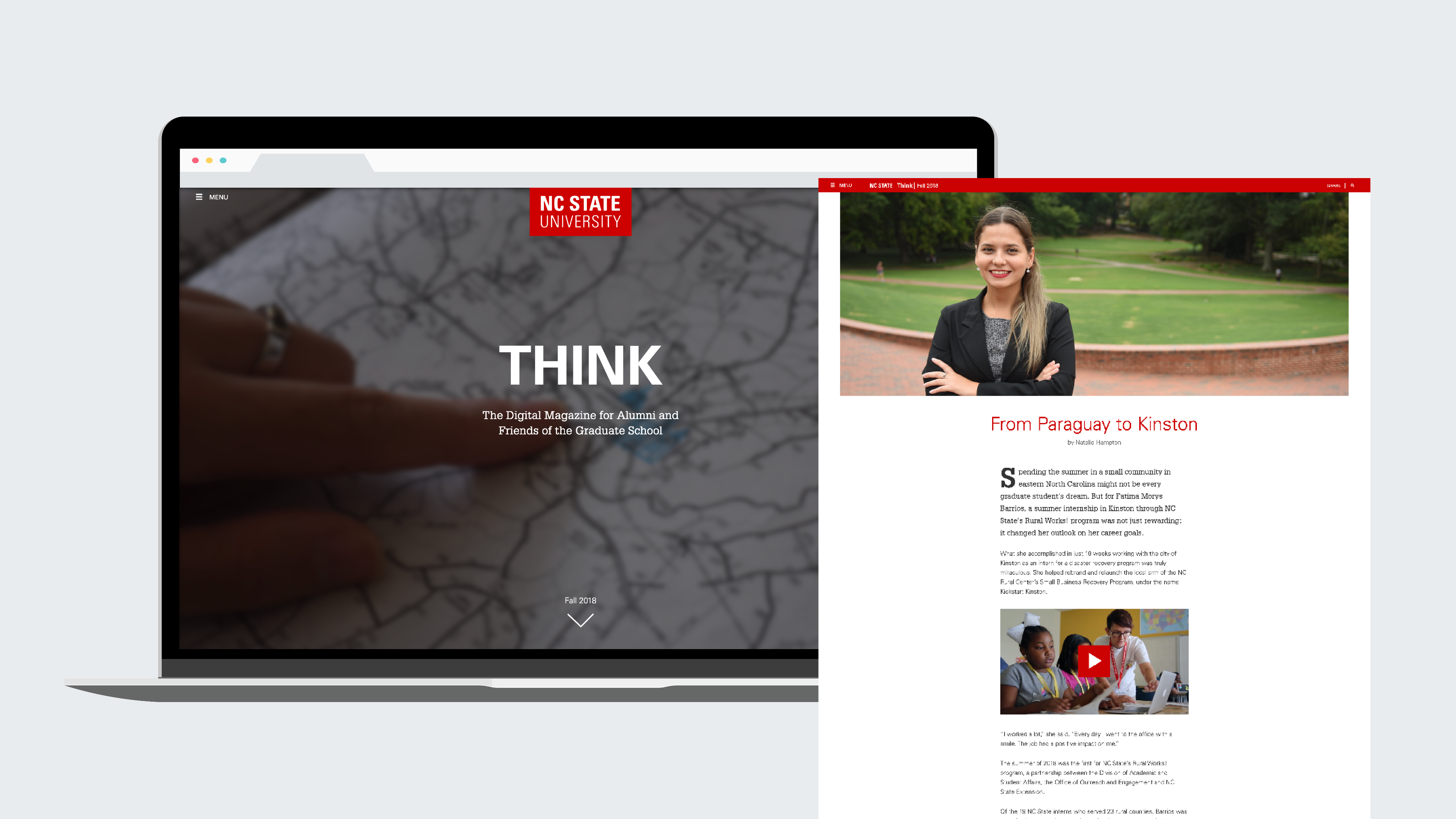
We migrated the magazine platform to the latest version of WordPress using Gutenberg, allowing it to align with the university’s broader web ecosystem. Instead of remaining a standalone site, the magazine experience was merged into an enhanced version of the existing news platform — creating one cohesive, modular publishing system.
This unified system made backend management easier, resolved visual inconsistencies, and created seamless transitions across all university-owned properties.
Enhanced Feature Set
Combining the magazine and news platforms allowed us to leverage the news system’s existing components while building specialized blocks for digital magazine storytelling. Key new features included:
- Alternate Cover Designs: Visually distinctive covers that integrate directly with story headers.
- Custom Story Headers: Flexible header options to better support feature-length or thematic content.
- Curated Article Landing Pages: For example, Poole Thought Leadership, enabling thematic content collections within the same publishing system.
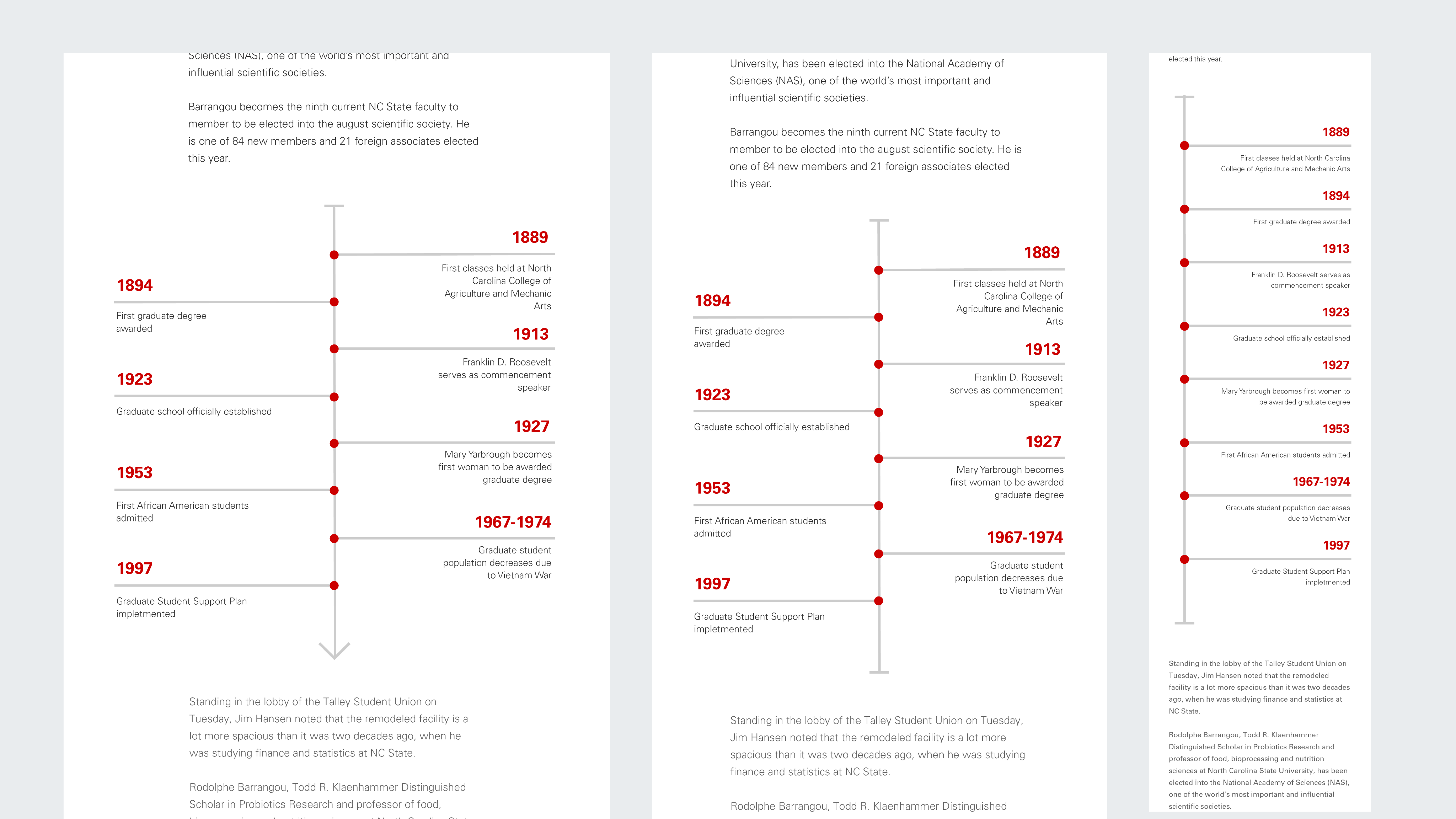
- Timeline Blocks: Chronologically structured layouts to support historical or event-based storytelling.
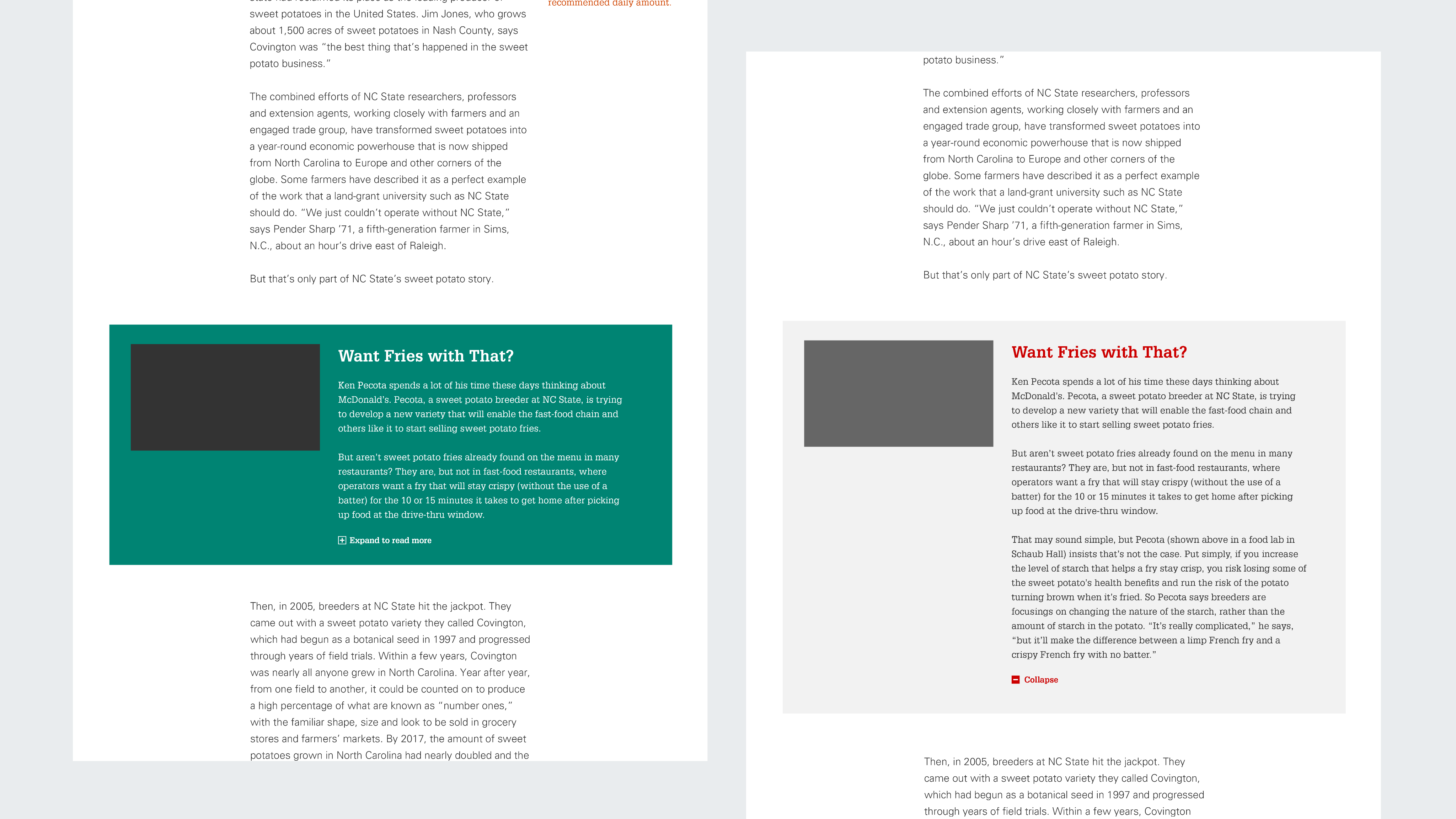
- Sandwich Narrative Blocks: Flexible inline components used to emphasize key facts or quotes within an article.
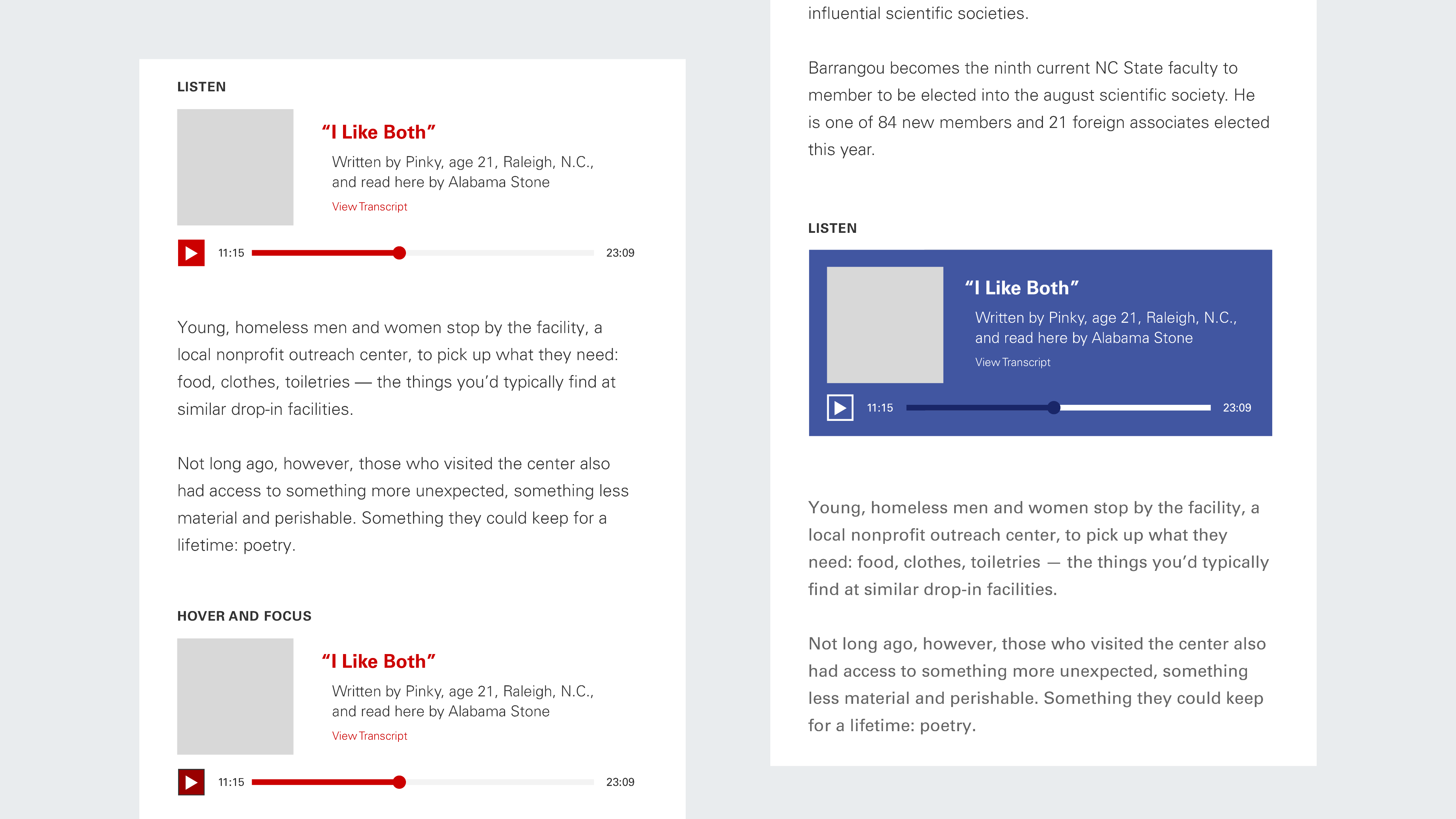
- Embedded Audio Player: Support for rich media integration, enabling storytelling through multiple formats.
Impact
By streamlining the design, modernizing the CMS infrastructure, and expanding storytelling tools, we delivered a future-forward solution that empowers university communicators to create engaging digital magazines within a flexible and cohesive platform.
This transformation not only improved the editorial experience but also enhanced brand consistency, technical maintainability, and user experience across NC State’s digital ecosystem.
Lindsey Shepherd
Admissions Viewbook
Visual Design and Marketing
Knowledge and Skills Domain
Logo Design
About
Resume
Contact
Digital Magazine Platform
UX/UI Design, NC State University
Table of Contents
Overview
As part of a broader digital transformation effort, NC State launched a new digital magazine platform to replace its traditional print publications and outdated digital infrastructure. This initiative reimagined what a university magazine could be in a modern, web-native format — integrated, scalable, and easier to use.
We sought to evolve the magazine framework into a dynamic publishing platform that not only unified the university’s digital content ecosystem but also delivered a consistent, high-quality user experience across all affiliated sites.
My Role
I served as one of two lead UX/UI product designers, working in close collaboration with developers and a project manager. My responsibilities spanned the full product design lifecycle:
- Conducting user and stakeholder research
- Mapping UX pain points and workflows
- Prototyping and testing interaction models
- Designing the UI system, layouts, and reusable blocks
- Collaborating on frontend development handoff
Problem
To ensure the new platform addressed real user needs, we conducted interviews with content editors, site managers, and communications leads across campus. From these discussions, three core issues emerged:
1. Disjointed User Interface
Most university clients manage a suite of digital properties — typically a primary marketing site, a news site, and a magazine site. These platforms were siloed, visually inconsistent, and lacked integration, creating a fragmented user experience for both editors and readers.
In particular, the magazine UI diverged from the design and functionality of its companion sites, requiring users to relearn navigation and content behaviors when moving between platforms.
2. Limited Storytelling Tools
The magazine’s original content management system offered only a few rigid layout options, limiting creativity and flexibility. In contrast, the university’s newer news platform had a much more expansive component library. Editors found the magazine restrictive by comparison, especially when trying to build rich editorial features or highlight multimedia content.
3. Outdated Backend Infrastructure
The magazine platform was still running on an older version of WordPress, which was nearing end-of-life support. This presented a major risk for security and long-term maintenance. Furthermore, it created incompatibility with the university’s upgraded news platform, which used the Gutenberg block editor. Clients managing multiple sites were juggling different systems with different capabilities.
Solution and Results
Modernized Infrastructure
We migrated the magazine platform to the latest version of WordPress using Gutenberg, allowing it to align with the university’s broader web ecosystem. Instead of remaining a standalone site, the magazine experience was merged into an enhanced version of the existing news platform — creating one cohesive, modular publishing system.
This unified system made backend management easier, resolved visual inconsistencies, and created seamless transitions across all university-owned properties.
Enhanced Feature Set
Combining the magazine and news platforms allowed us to leverage the news system’s existing components while building specialized blocks for digital magazine storytelling. Key new features included:
- Alternate Cover Designs: Visually distinctive covers that integrate directly with story headers.
- Custom Story Headers: Flexible header options to better support feature-length or thematic content.
- Curated Article Landing Pages: For example, Poole Thought Leadership, enabling thematic content collections within the same publishing system.
- Timeline Blocks: Chronologically structured layouts to support historical or event-based storytelling.
- Sandwich Narrative Blocks: Flexible inline components used to emphasize key facts or quotes within an article.
- Embedded Audio Player: Support for rich media integration, enabling storytelling through multiple formats.
Impact
By streamlining the design, modernizing the CMS infrastructure, and expanding storytelling tools, we delivered a future-forward solution that empowers university communicators to create engaging digital magazines within a flexible and cohesive platform.
This transformation not only improved the editorial experience but also enhanced brand consistency, technical maintainability, and user experience across NC State’s digital ecosystem.
Digital Magazine Platform
UX/UI Design, NC State University
Table of Contents
Overview
As part of a broader digital transformation effort, NC State launched a new digital magazine platform to replace its traditional print publications and outdated digital infrastructure. This initiative reimagined what a university magazine could be in a modern, web-native format — integrated, scalable, and easier to use.
We sought to evolve the magazine framework into a dynamic publishing platform that not only unified the university’s digital content ecosystem but also delivered a consistent, high-quality user experience across all affiliated sites.
My Role
I served as one of two lead UX/UI product designers, working in close collaboration with developers and a project manager. My responsibilities spanned the full product design lifecycle:
- Conducting user and stakeholder research
- Mapping UX pain points and workflows
- Prototyping and testing interaction models
- Designing the UI system, layouts, and reusable blocks
- Collaborating on frontend development handoff
Problem
To ensure the new platform addressed real user needs, we conducted interviews with content editors, site managers, and communications leads across campus. From these discussions, three core issues emerged:
1. Disjointed User Interface
Most university clients manage a suite of digital properties — typically a primary marketing site, a news site, and a magazine site. These platforms were siloed, visually inconsistent, and lacked integration, creating a fragmented user experience for both editors and readers.
In particular, the magazine UI diverged from the design and functionality of its companion sites, requiring users to relearn navigation and content behaviors when moving between platforms.
2. Limited Storytelling Tools
The magazine’s original content management system offered only a few rigid layout options, limiting creativity and flexibility. In contrast, the university’s newer news platform had a much more expansive component library. Editors found the magazine restrictive by comparison, especially when trying to build rich editorial features or highlight multimedia content.
3. Outdated Backend Infrastructure
The magazine platform was still running on an older version of WordPress, which was nearing end-of-life support. This presented a major risk for security and long-term maintenance. Furthermore, it created incompatibility with the university’s upgraded news platform, which used the Gutenberg block editor. Clients managing multiple sites were juggling different systems with different capabilities.
Solution and Results
Modernized Infrastructure
We migrated the magazine platform to the latest version of WordPress using Gutenberg, allowing it to align with the university’s broader web ecosystem. Instead of remaining a standalone site, the magazine experience was merged into an enhanced version of the existing news platform — creating one cohesive, modular publishing system.
This unified system made backend management easier, resolved visual inconsistencies, and created seamless transitions across all university-owned properties.
Enhanced Feature Set
Combining the magazine and news platforms allowed us to leverage the news system’s existing components while building specialized blocks for digital magazine storytelling. Key new features included:
- Alternate Cover Designs: Visually distinctive covers that integrate directly with story headers.
- Custom Story Headers: Flexible header options to better support feature-length or thematic content.
- Curated Article Landing Pages: For example, Poole Thought Leadership, enabling thematic content collections within the same publishing system.
- Timeline Blocks: Chronologically structured layouts to support historical or event-based storytelling.
- Sandwich Narrative Blocks: Flexible inline components used to emphasize key facts or quotes within an article.
- Embedded Audio Player: Support for rich media integration, enabling storytelling through multiple formats.
Impact
By streamlining the design, modernizing the CMS infrastructure, and expanding storytelling tools, we delivered a future-forward solution that empowers university communicators to create engaging digital magazines within a flexible and cohesive platform.
This transformation not only improved the editorial experience but also enhanced brand consistency, technical maintainability, and user experience across NC State’s digital ecosystem.